Blog
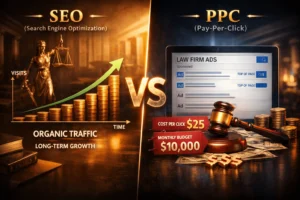
Law Firm SEO vs PPC: Which Generates More Legal Clients in 2026?
Law firm seo vs ppc Law Firm SEO vs PPC: Which Generates More Legal Clients in 2026 Book a Free Strategy Call See Case Studies
We now offer Free AI Visibility Audits. Find out if ChatGPT, Perplexity & Google AI can find your business. Claim yours →
By Saumya Patel | Content Writer | 4+ Years of Industry Experience | Last Updated: June 14, 2026 | 17 min read
Dental SEO services in the USA help clinics rank in Google Maps, organic results, and AI answers for high-intent searches like “dentist near me.” Expect to invest $1,000–$3,000/month in most markets (up to $5,000+ in major metros), against an average patient lifetime value near $6,700. That math is why dental SEO outperforms ads long-term — but only if the provider handles the two things generic SEO ignores: YMYL clinical accuracy and HIPAA-compliant tracking.
Most patients no longer search for a dentist by name. They search “dentist near me,” “emergency dentist,” or “family dental clinic in Houston”. If your clinic isn’t in the Google Maps Local Pack or on page one of the organic listings, you’re losing patients to local competitors every single day.
But every article on this topic tells you that. What none of them do is break down what it actually costs, what it realistically returns, and how to tell a real dental SEO provider from a generic agency that will quietly put your practice at severe regulatory and legal risk. This guide is built to change that.
What are dental SEO services in the USA?
Dental SEO services optimize a clinic’s website and Google Business Profile so it ranks for local, patient-intent searches like “dentist near me” or “emergency dentist [city]”. The work spans local keyword research, Google Business Profile optimization, technical and on-page SEO, city and service landing pages, reviews, citations, and — because dental is a medical niche — clinically accurate, HIPAA-compliant execution.
Unlike general search engine optimization, dental SEO is highly localized and driven by high patient intent. The goal is not generic blog traffic — it is appearing exactly when a local patient is ready to book an appointment.
Is dental SEO worth it in 2026?
Direct answer: Yes, and the economics are incredibly clear. The average dental patient lifetime value is roughly $6,700, with specialized cosmetic or implant cases easily ranging from $5,000 to $50,000+. Against a typical $1,000–$3,000/month investment, gaining just a handful of new patients per month delivers strong ROI — and unlike ads, SEO keeps producing after you stop paying.
| Metric | Typical 2026 Figure | Why It Matters |
|---|---|---|
| Patient Lifetime Value (LTV) | ~$6,700 average | The direct return side of every SEO dollar spent. |
| High-Value Cases | $5,000–$50,000+ (implants, cosmetic) | Just one high-value case can fully fund a year of SEO. |
| Dental SEO Cost | $1,000–$3,000/mo (major metro: $3,000–$5,000+) | The baseline investment side of your strategy. |
| Dental PPC Cost | $5–$25+ per click | Highly expensive, and leads stop the millisecond you pause ads. |
| Top-3 Map Pack Share | 60–70% of new-patient clicks | This is where local appointments actually originate. |
The math: If a single new patient is worth ~$6,700, a $2,000/month SEO investment needs to secure just one additional patient every three months to break even. Everything beyond that is pure, compounding profit — traffic you own, rather than renting from Google Ads.
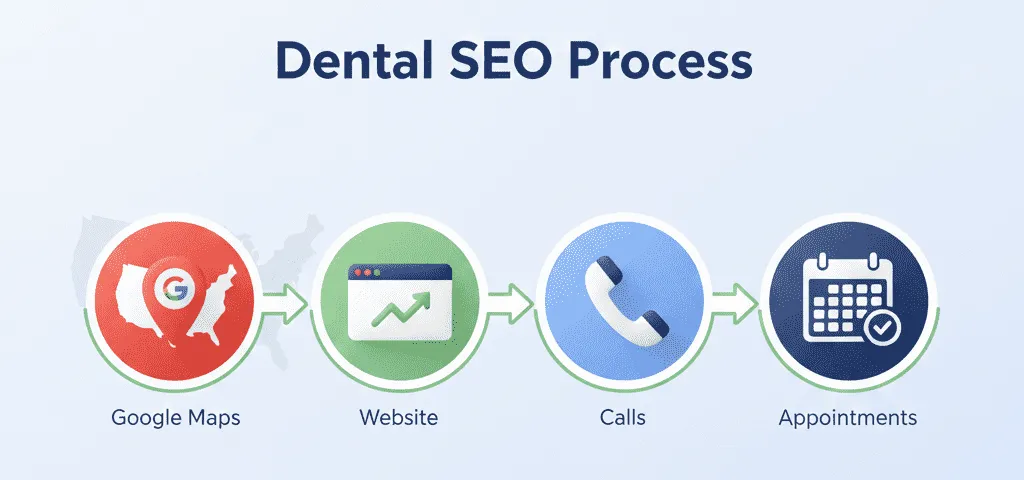
Dental SEO is not a single recurring task — it is a structured four-layer framework. Each layer only delivers a strong ROI if the technical and trust layer directly beneath it is structurally sound:
| Layer | What It Covers | What It Wins |
|---|---|---|
| 1. Foundation | Comprehensive SEO audit, site speed, mobile responsiveness, Core Web Vitals, technical cleanup. | Eligibility: Ensures Google can seamlessly crawl, index, and trust your website. |
| 2. Local Trust | Google Business Profile, patient review generation, citation cleanup, consistent NAP. | The Map Pack: Real estate where over 60% of search conversions take place. |
| 3. Relevance | Local landing pages, service-specific pages, mapping search queries to user intent. | High Ranking: Dominance in “dentist near me” and specialized localized dental searches. |
| 4. Authority | Clinician-reviewed medical content, FAQ schema markup, and distinct entity profiles. | Organic & AI: Clean visibility in organic SERPs and AI-driven search engine answers. |
The principle: Local brand trust beats raw content volume for dental clinics. A practice possessing a highly optimized Google Business Profile and 150 recent patient reviews will routinely out-rank a site with a beautiful blog but an unverified listing. Build in chronological order — skipping a layer wastes everything above it.
A proper campaign begins with a structural audit: mapping your site architecture, checking mobile performance, assessing Google Business Profile health, tracking local competitor strategies, and examining your review profile. This pinpoints exactly why you aren’t currently ranking so you can fix those blocks before writing a single word of content.
Optimizing your Google Business Profile is the single most important part of local SEO for dental offices: verify correct categories, declare real service addresses (never P.O. boxes or fake locations), craft precise service descriptions, post weekly updates, and answer every single review. Well-managed profiles routinely generate more patient appointments than core websites alone.
Dental keyword research should target high-intent patient queries: “family dentist in [city],” “emergency dentist near me,” or “dental implants [city]”. These attract active searchers ready to book an appointment, not random informational searchers. Ensure every key specialty service and service town has its own unique, deeply written landing page — duplicated templates will trigger search engine filters and fall flat.
Clinician-reviewed content, structural schema, and clear entity data build the local authority Google actively looks for. This is also what earns your practice references inside AI Overviews and assistants like ChatGPT Search or Perplexity, where a growing share of patients now start their health journeys.
This is the critical detail that separates specialized healthcare SEO providers from general digital marketing agencies — and why you must be extremely cautious about who you partner with:
Vetting Rule: If an SEO provider pitches a “dental SEO” campaign but never mentions medical accuracy reviews, encrypted tracking, or signing a BAA, they aren’t equipped for healthcare — and they are exposing your practice to massive liabilities.
| Dental SEO Focus | General SEO Focus |
|---|---|
| Targets high-intent local patients ready to book care. | Targets broad, generalized informational audiences. |
| Prioritizes Google Maps Local Pack dominance. | Prioritizes standard organic listings. |
| Optimizes for strict local geographic search intent. | Often ignores physical geographic restrictions. |
| Built to capture new booking appointments. | Built primarily to increase raw traffic volume. |
| Demands YMYL clinical accuracy and compliance. | Operates under standard, lower content bars. |
| Requires HIPAA-compliant analytics and call logging. | Standard, unencrypted analytics are perfectly fine. |
Many local clinics struggle with digital marketing because they hired a generic SEO agency. Specialized dental marketing is carefully designed for how patients search for healthcare and the unique regulatory environment in which clinics must operate.
How long does dental SEO take to show results?
Direct answer: Most dental offices see technical health and early visibility improvements in 1–2 months, local Google Maps growth by 3–4 months, and a stable stream of patient bookings from month 6 onward. Highly competitive metro areas typically sit on the longer end of this timeline. SEO is not instant — but unlike ads, the visibility gains compound and persist.
| Timeline | What Happens & What You See |
|---|---|
| Months 1–2 | Resolving technical site issues, optimizing Google Business Profiles, and capturing early local visibility wins. |
| Months 3–4 | Google Maps metrics climb, local rankings rise for core phrases, and your first steady calls come in. |
| Months 6+ | A predictable lead flow, stable patient appointments, and compounding organic ROI. |
Ask these direct questions before signing any contract. The answers will help you separate genuine healthcare marketing specialists from repackaged generalist firms:
Dental SEO delivers the strongest, most predictable returns for single-location clinics competing for high local “near me” search volume, multi-location practices establishing a strong brand footprint across multiple municipal areas, and high-ticket dental specialists. Pediatric, orthodontic, cosmetic, emergency, and dental implant practices benefit immensely, as securing just one or two major cases can completely fund months of marketing spend.
For dental clinics seeking steady, long-term patient acquisition, specialized local SEO services in the USA are no longer optional. Prospective patients search locally, compare reputations rapidly, and book appointments with the practices that look the most visible and credible.
Build your marketing strategy in the correct order: lay down your technical foundation, secure your local map trust, build deep service relevance, and enforce clinical authority. Partner with a provider who understands YMYL and HIPAA regulations, and track booked appointments rather than empty traffic clicks. When a single patient carries a lifetime value of ~$6,700, professional SEO is not an overhead expense — it is an appreciating business asset.
Get a completely free, HIPAA-aware, clinician-reviewed dental SEO audit from Tarasaka to uncover your top growth blocks.
What is dental SEO and how does it work?
Dental SEO improves a clinic’s visibility in Google Search, Google Maps, and AI answers so patients can find, call, and book easily. It works by optimizing your Google Business Profile, building local trust through reviews and citations, creating city and service pages, and publishing clinically accurate content.
How is dental SEO different from local SEO?
Dental SEO is local SEO plus healthcare requirements. It carries the same Map Pack and “near me” mechanics, but adds YMYL clinical accuracy (content reviewed by a licensed dentist) and HIPAA-compliant analytics and call tracking — requirements generic local SEO ignores.
Can dental SEO help my clinic rank for “near me” searches?
Yes — that’s its core purpose. “Near me” rankings are won mainly through Google Business Profile optimization, proximity, reviews, and local relevance. A top-3 Map Pack position captures roughly 60–70% of new-patient clicks.
How long does dental SEO take?
Technical and visibility gains appear in 1–2 months, Google Maps and local rankings grow by 3–4 months, and stable appointment flow typically arrives from 6 months onward. Competitive metros take longer, but the results compound rather than stopping when you pause.
Is dental SEO worth it in 2026?
Yes. With average patient lifetime value near $6,700, a $2,000/month investment breaks even on roughly one additional patient per quarter. Unlike ads at $5–$25+ per click, SEO builds an asset that keeps producing after you stop spending.
How much do dental SEO services cost in the USA?
Most clinics invest $1,000–$3,000 per month, rising to $3,000–$5,000+ in highly competitive metros. Cost depends on clinic size, number of locations, competition, and content scope. Packages under about $500/month rarely deliver meaningful results.

Saumya Patel is a Content Writer at Tarasaka Digital Solutions with over 4 years of experience creating SEO-focused content for businesses across multiple industries. Her areas of expertise include SEO, Local SEO, AI SEO, AEO (Answer Engine Optimization), GEO (Generative Engine Optimization), content strategy, and digital marketing.
At Tarasaka Digital Solutions, Saumya researches search trends, analyzes ranking factors, studies AI search behavior, and creates evidence-based content designed to help businesses improve online visibility, attract qualified leads, and build long-term organic growth. His content is developed using industry best practices, competitor analysis, and real-world search marketing insights to ensure accuracy, relevance, and practical value for readers.
Law firm seo vs ppc Law Firm SEO vs PPC: Which Generates More Legal Clients in 2026 Book a Free Strategy Call See Case Studies

Local Businesses Rank In Google How Local Businesses Can Rank in Google AI Overviews in 2026 Book a Free Strategy Call See Case Studies FAQ
Local Law Firm SEO Law Firm SEO Guide: How Lawyers Rank #1 on Google Representative results from a client engagement. Identity protected by NDA. Book