Blog
Why 3 Companies Control 82% of Google Maps (And The Visibility Engineering™ Fix)
Roofing SEO Florida, USA The Florida Roofing Monopoly: Why 3 Companies Control 82% of Google Maps (And The Visibility Engineering™ Fix) Book a Free Strategy
We now offer Free AI Visibility Audits. Find out if ChatGPT, Perplexity & Google AI can find your business. Claim yours →
By Saumya Patel | Content Writer | 4+ Years of Industry Experience | Last Updated: August 31, 2026 | ~15 min read
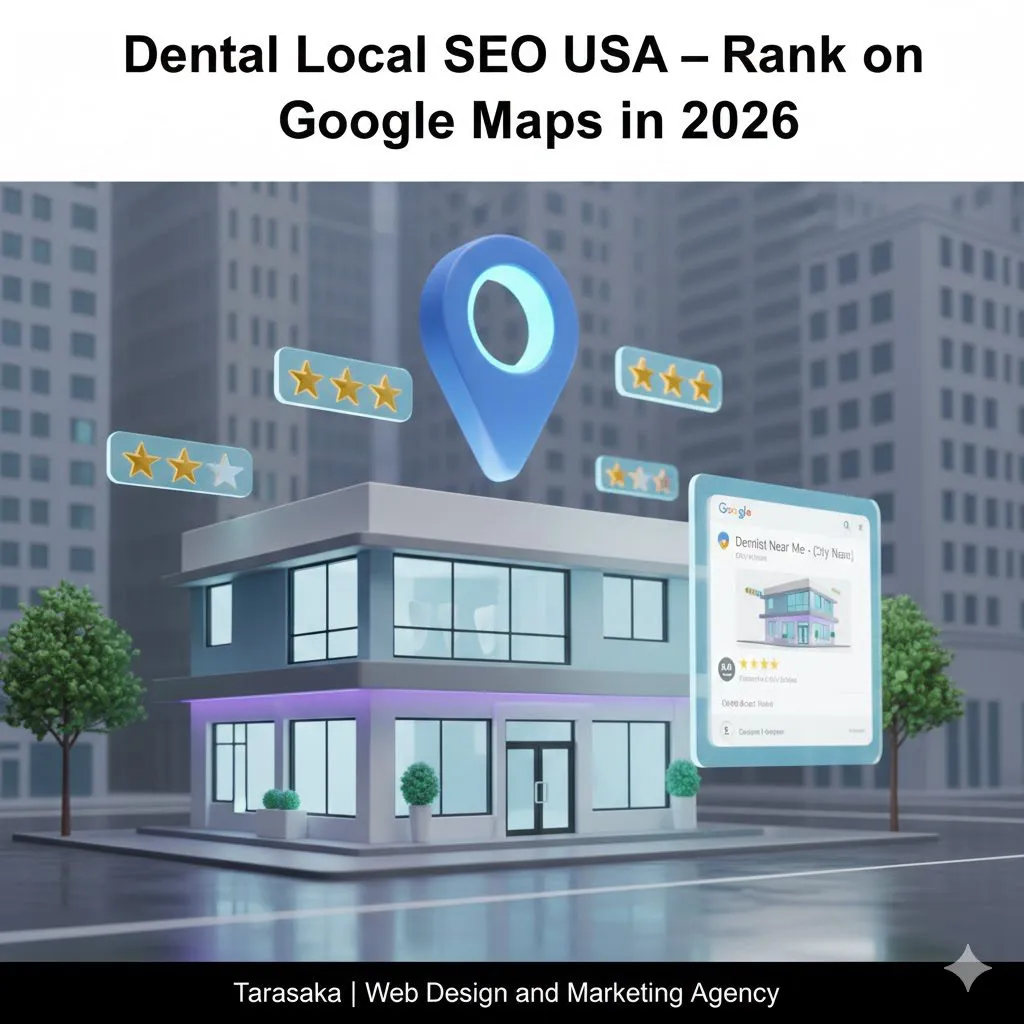
Dental local SEO USA ranks clinics in the Google Map Pack using three factors: Relevance, Distance, and Prominence. Here’s what most guides miss — Distance is fixed, so the real leverage sits in Prominence and Relevance. For dentists, reviews are the single strongest controllable signal, not a mid-list task. Clinics that concentrate effort on reviews and profile relevance out-rank ones that treat all seven “best practices” as equal.
Patients no longer browse multiple dental websites. They search dentist near me, scan the Map Pack, and call whichever clinic looks trustworthy, close, and well-reviewed. If you’re not in those top three, you’re invisible to patients who are already ready to book.
Most dental Maps guides list the same seven tactics as equals. This one doesn’t. It’s built around a proprietary model — the Dental Prominence Priority Framework — that tells you which of Google’s ranking factors actually deserves your time. For the strategic and cost picture, see our Dental SEO Services USA guide.
How does Google rank dental clinics on Maps?
Direct answer: Google ranks the Map Pack using three factors: Relevance (how well your profile and content match the search), Distance (how close you are to the searcher), and Prominence (how trusted and well-known your clinic is, signaled mainly by reviews, citations, and website authority). Distance is largely fixed; Relevance and Prominence are where dental clinics actually win or lose.
First principles: you cannot move your clinic closer to every patient who searches, so Distance sits mostly outside your control. That means your entire competitive advantage lives in the two factors you can actively shape — and most clinics spread effort evenly across all three instead of concentrating where it counts.
Rank your effort by how much control you have and how much each factor moves rankings:
| Factor | Your Control | Biggest Levers for Dentists | Effort Priority |
|---|---|---|---|
| Prominence | High | Reviews (volume, recency, responses), citations, website authority | Highest |
| Relevance | High | Service listings, primary category, city/service pages, keywords | High |
| Distance | Low | Accurate service area; additional locations if genuinely real | Structural only |
The principle: concentrate on Prominence and Relevance — the factors you control — rather than worrying about Distance, which you mostly can’t change. Reviews sit at the top because they’re the strongest, most controllable Prominence signal a dental clinic has.
Reviews are both a ranking factor and the patient’s trust shortcut — and for dental specifically, they carry extra weight because choosing a dentist is a higher-trust decision than most local purchases. Three dimensions matter: volume (clinics with 50+ recent reviews consistently outperform those with outdated or unmanaged profiles), recency (a steady drip beats a stale spike from three years ago), and responses (replying to every review — especially critical ones — signals engagement to Google and reassurance to prospective patients).
Relevance tells Google — and the patient — exactly what you offer. You control it directly:
You can’t relocate your clinic closer to every searcher, but you can make sure your service area is accurately configured and, if you genuinely operate multiple locations, that each has its own verified, distinct profile — never a fake or duplicate listing, which Google penalizes. For most single-location practices, Distance is a one-time setup task, not an ongoing effort, which is exactly why it shouldn’t take time away from reviews and relevance.
Do citations matter for dental local SEO?
Direct answer: Yes, but consistency matters more than volume. Citations are online mentions of your clinic’s name, address, and phone number across healthcare directories, dental association listings, and local business platforms. Mismatched or outdated citations weaken Google’s confidence in your clinic’s identity and can suppress Map Pack rankings even when your profile itself is strong.
Prioritize healthcare-specific directories (Healthgrades, Zocdoc, Vitals) and dental association listings over generic ones — they carry more topical trust for a YMYL category like dental.
Dental content is YMYL (Your Money or Your Life), which raises the bar beyond ordinary local SEO in two ways most Maps guides never mention. Service and educational content should be written or reviewed by a licensed dentist, with credentials visible — this protects both rankings and patients. And your tracking must be HIPAA-compliant: standard Google Analytics on a dental site can capture data that becomes protected health information under 2026 HHS guidance, so analytics and call tracking need a signed Business Associate Agreement. Neither of these appears in a typical “how to rank on Google Maps” article — because most aren’t written for healthcare.
How long does dental local SEO take to show results?
Direct answer: Most clinics see initial Google Maps movement within 6–12 weeks of consistent, correctly-prioritized work, with stronger, more stable results by 3–6 months. Clinics that concentrate early effort on reviews and profile relevance — rather than spreading it evenly — typically see movement faster, because those are the highest-leverage controllable signals.
Dental local SEO USA isn’t seven equal tasks — it’s three ranking factors with very different leverage. Distance is mostly fixed, so concentrate on what you control: build Prominence through a real review system, strengthen Relevance through a complete profile and local pages, and treat both as ongoing, compounding work — not a one-time setup.
Clinics that prioritize this way build a predictable path to Google Maps visibility and appointment bookings without depending entirely on paid ads. To see how this fits your clinic’s broader strategy and economics, explore our Dental SEO Services USA page.
Get a free dental Google Maps audit from Tarasaka — HIPAA-aware and clinician-reviewed.
How long does dental local SEO take?
Most clinics see initial Google Maps movement within 6–12 weeks of consistent, correctly-prioritized work, with stronger results by 3–6 months. Clinics that focus early effort on reviews and profile relevance — the highest-leverage controllable factors — typically move faster than those spreading effort evenly.
Do dental clinics need a website for local SEO?
Yes. While the Google Business Profile drives Map Pack visibility, a website with city-specific and service-specific pages reinforces Relevance, supports organic rankings beyond the Map Pack, and gives Google clear signals about where you operate and what you treat.
How many reviews does a dental clinic need?
There’s no fixed number, but clinics with 50 or more recent, genuine reviews consistently outperform those with outdated or unmanaged profiles. Volume, recency, and your responses to reviews all factor into ranking — a steady stream beats a one-time push.
Can multi-location dental clinics rank locally?
Yes, if each location has its own accurate, verified Google Business Profile with distinct service area, reviews, and citations. Duplicate or inconsistent listings across locations weaken Prominence and Relevance signals for all of them — each location needs to be treated as its own local entity.
How does Google rank dental clinics on Maps?
On three factors: Relevance (how well your profile and content match the search), Distance (proximity to the searcher), and Prominence (trust signals like reviews, citations, and website authority). Distance is largely fixed, so Relevance and Prominence — especially reviews — are where clinics actually win or lose rankings.
Do citations matter for dental local SEO?
Yes, and consistency matters more than volume. Mismatched name, address, or phone details across healthcare directories and dental association listings weaken Google’s confidence in your clinic’s identity, even when your Google Business Profile itself is strong.
What types of dental clinics benefit from SEO?
General and family practices competing on “near me” volume, high-value specialists (implants, Invisalign, cosmetic, sedation) where one case justifies the spend, multi-location groups needing borough-by-borough visibility, and new practices building authority — any clinic treating its site as a patient-acquisition asset.

Saumya Patel is a Content Writer at Tarasaka with over 4 years of experience creating SEO-focused content for businesses across multiple industries. Her areas of expertise include SEO, Local SEO, AI SEO, AEO (Answer Engine Optimization), GEO (Generative Engine Optimization), content strategy, and digital marketing.
At Tarasaka, Saumya researches search trends, analyzes ranking factors, studies AI search behavior, and creates evidence-based content designed to help businesses improve online visibility, attract qualified leads, and build long-term organic growth. His content is developed using industry best practices, competitor analysis, and real-world search marketing insights to ensure accuracy, relevance, and practical value for readers.
Roofing SEO Florida, USA The Florida Roofing Monopoly: Why 3 Companies Control 82% of Google Maps (And The Visibility Engineering™ Fix) Book a Free Strategy

Healthcare SEO Cost How Much Does Healthcare SEO Cost in India? Book a Free Strategy Call See Case Studies Healthcare SEO in India 2026: Pricing,

SEO Services Ahmedabad SEO Services in Ahmedabad 2027: Pricing, Strategies, Results & What to Expect Book a Free Strategy Call See Case Studies SEO Services