
Blog
Why 3 Companies Control 82% of Google Maps (And The Visibility Engineering™ Fix)
Roofing SEO Florida, USA The Florida Roofing Monopoly: Why 3 Companies Control 82% of Google Maps (And The Visibility Engineering™ Fix) Book a Free Strategy
We now offer Free AI Visibility Audits. Find out if ChatGPT, Perplexity & Google AI can find your business. Claim yours →
By Saumya Patel | Content Writer | 4+ Years of Industry Experience | Last Updated: September, 2026 | ~7 min read
ChatGPT speeds up SEO work — drafting content, generating keyword ideas, writing meta tags — but it doesn’t rank content on its own, and Google evaluates AI-assisted content the same way it evaluates any content: on quality and usefulness, not on how it was produced. Used as a first-draft and research accelerator with real human review, it’s a genuine productivity gain. Published raw and unedited, it’s exactly the kind of thin content Google’s helpful-content systems are built to catch.
ChatGPT has changed how SEO work gets done — content drafts, keyword ideas, meta tags, and repetitive tasks all move faster with it in the workflow. This guide covers the practical, prompt-level ways to use it for SEO, plus the guardrails that keep faster output from becoming lower-quality output. To stay ahead of modern search shifts, check out our guide on AI search optimization.
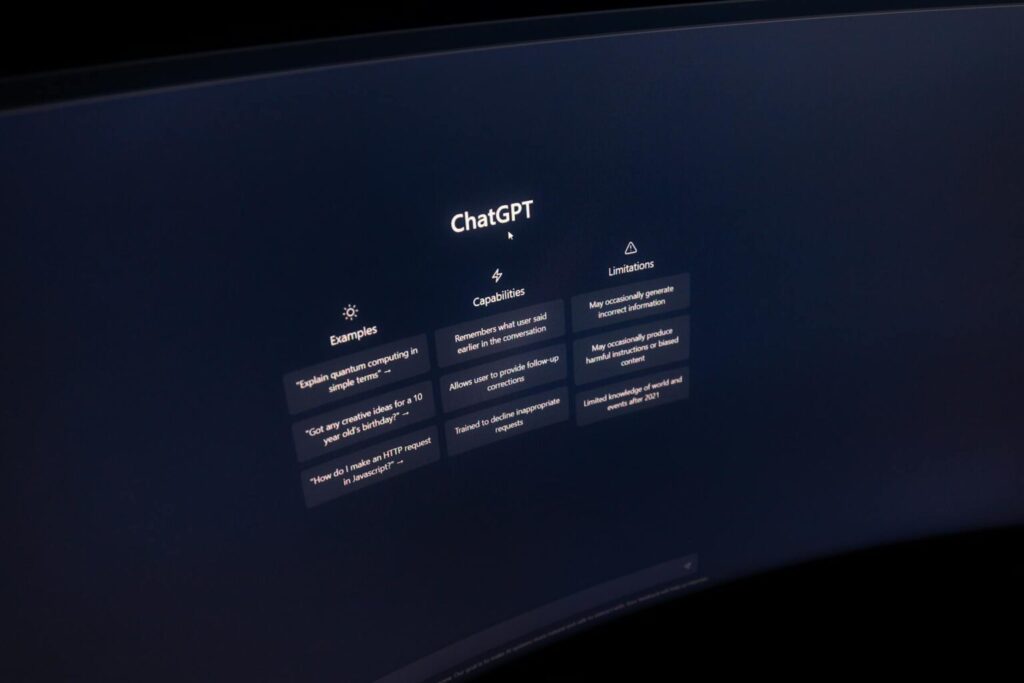
ChatGPT is an AI language model that generates text from prompts. For SEO work specifically, it’s useful for streamlining content drafts, generating keyword-rich headline options, and identifying topic ideas relevant to your niche — all tasks that used to take much longer to do manually.
Use prompts like:
The key step most guides skip: refine and fact-check the output, add real expertise and specifics only you have, and edit it into your actual brand voice before it goes anywhere near ‘publish.’
ChatGPT can generate keyword directions quickly:
Treat this as a brainstorming step, not a data source. Pair every suggestion with an actual keyword tool (Semrush, Ahrefs, Google Keyword Planner) before committing content strategy to it — ChatGPT doesn’t have live search volume data.
“Generate 5 meta title and description variations for a page about [topic], keeping descriptions under 160 characters.” Generate several options, then pick or edit the one that actually reflects the page — don’t publish the first output unreviewed.
Generate draft H1/H2/H3 outlines, alt text starting points, and internal linking ideas. One correction worth making here: don’t ask ChatGPT to ‘improve keyword density.’ Keyword density has never been a confirmed Google ranking factor — write for the person searching, and let natural language handle relevance instead of targeting an arbitrary percentage.
Turn one blog post into several social updates, condense a long article into a newsletter snippet, or refresh outdated content with current information. Leveraging AI in this manner is a proven strategy to increase website traffic with content marketing while reshaping material you already know is accurate.
“Based on [competitor]’s published content on [topic], what subtopics or angles might they be missing?” Useful as a starting hypothesis — verify by actually reading the competing content, since ChatGPT can’t browse and evaluate a live competitor page unless that capability is explicitly enabled and used correctly.
“Suggest 10 blog topics for [industry], focused on questions a real customer would ask.” Use this to keep a content calendar full, but validate ideas against actual search demand before committing real production time.
Generate first-draft ideas for location-specific content — “Top Roofing Tips in [City]” style topics — and rough Google Business Profile description starting points. Add genuine local specificity (real neighborhoods, real context) before publishing; a generic AI draft with the city name inserted reads as thin content to both users and Google. Explore full execution strategies in our comprehensive SEO services overview.
Good candidates for automation: drafting outreach email templates, generating internal-linking ideas, brainstorming headline variations. Keep strategy, final editing, and anything public-facing under human judgment.
Speed without a review step is how AI tools damage rankings instead of helping them. A simple checklist before anything AI-assisted goes live:
| Check | Why it matters |
|---|---|
| Fact-checked for accuracy | AI models can generate plausible-sounding but incorrect information |
| Edited for genuine expertise and specifics | Generic AI output reads as generic — real detail is what differentiates it |
| Reviewed for brand voice and tone | Unedited AI output often sounds the same regardless of whose site it’s on |
| Checked against real keyword/search data | ChatGPT can’t see live search volume or current SERP data |
| Not published purely to hit a content-volume quota | Google’s helpful-content systems specifically target thin, mass-produced content |
Direct answer: No — not for being AI-assisted specifically. Google has stated it evaluates content on quality and helpfulness regardless of how it was produced. What gets penalized is low-effort, generic, or mass-produced content designed primarily to manipulate rankings — a description that applies equally to bad human-written content and bad AI-written content alike. Understanding how search engines treat generative text is crucial, especially as updates like the Google AI Overview impact local businesses.
ChatGPT is a genuine productivity tool for SEO work — not because it has some special ability to ‘talk to’ search engines, but because it speeds up drafting, ideation, and repetitive tasks that used to eat hours. Learn more about implementing these workflows in our detailed guide on how to use ChatGPT for SEO effectively. The gains are real when a human reviews, fact-checks, and adds genuine expertise before anything goes live. Skip that step, and speed just gets you more thin content, faster.
Talk to Tarasaka to elevate your digital marketing strategy.
Can ChatGPT actually improve my Google rankings?
Not directly — it doesn’t have a special connection to Google’s ranking systems. It helps indirectly by speeding up the production of well-structured, genuinely useful content, which is what actually earns rankings, provided a human reviews and improves the output before publishing.
Is it safe to publish ChatGPT content without editing it?
No. Unedited AI output is generic by default and risks factual errors, and Google’s helpful-content systems specifically target low-effort, mass-produced content — whether AI-written or not. Always fact-check, add real expertise, and edit for voice before publishing.
Does ChatGPT know current keyword search volumes?
No — it doesn’t have access to live search data. Use it to brainstorm keyword directions, then verify actual volume and difficulty with a real keyword tool like Semrush, Ahrefs, or Google Keyword Planner.
Should I still target a specific keyword density when using ChatGPT?
No. Keyword density has never been a confirmed Google ranking factor. Write naturally for the person searching, and let genuine topical relevance do the work instead of chasing a specific percentage.
What's the best way to use ChatGPT for local SEO content?
Use it for first-draft ideas and structure, then add real, specific local detail — actual neighborhoods, genuine local context — before publishing. A generic AI draft with a city name inserted reads as thin content to both readers and search engines.

Saumya Patel is a Content Writer at Tarasaka Digital Solutions with over 4 years of experience creating SEO-focused content for businesses across multiple industries. Her areas of expertise include SEO, Local SEO, AI SEO, AEO (Answer Engine Optimization), GEO (Generative Engine Optimization), content strategy, and digital marketing.
At Tarasaka Digital Solutions, Saumya researches search trends, analyzes ranking factors, studies AI search behavior, and creates evidence-based content designed to help businesses improve online visibility, attract qualified leads, and build long-term organic growth. His content is developed using industry best practices, competitor analysis, and real-world search marketing insights to ensure accuracy, relevance, and practical value for readers.
Roofing SEO Florida, USA The Florida Roofing Monopoly: Why 3 Companies Control 82% of Google Maps (And The Visibility Engineering™ Fix) Book a Free Strategy

Healthcare SEO Cost How Much Does Healthcare SEO Cost in India? Book a Free Strategy Call See Case Studies Healthcare SEO in India 2026: Pricing,

SEO Services Ahmedabad SEO Services in Ahmedabad 2027: Pricing, Strategies, Results & What to Expect Book a Free Strategy Call See Case Studies SEO Services