

Blog
Why 3 Companies Control 82% of Google Maps (And The Visibility Engineering™ Fix)
Roofing SEO Florida, USA The Florida Roofing Monopoly: Why 3 Companies Control 82% of Google Maps (And The Visibility Engineering™ Fix) Book a Free Strategy

By Saumya Patel | Content Writer | 4+ Years of Industry Experience | · Updated 2026 · ~15 min read
This is general information, not tax or legal advice. Section 80-IAC eligibility, the IMB approval process, and filing requirements are fact-specific and change with each Union Budget. Work with a Chartered Accountant before making any incorporation, tax-year-selection, or filing decision based on this guide.
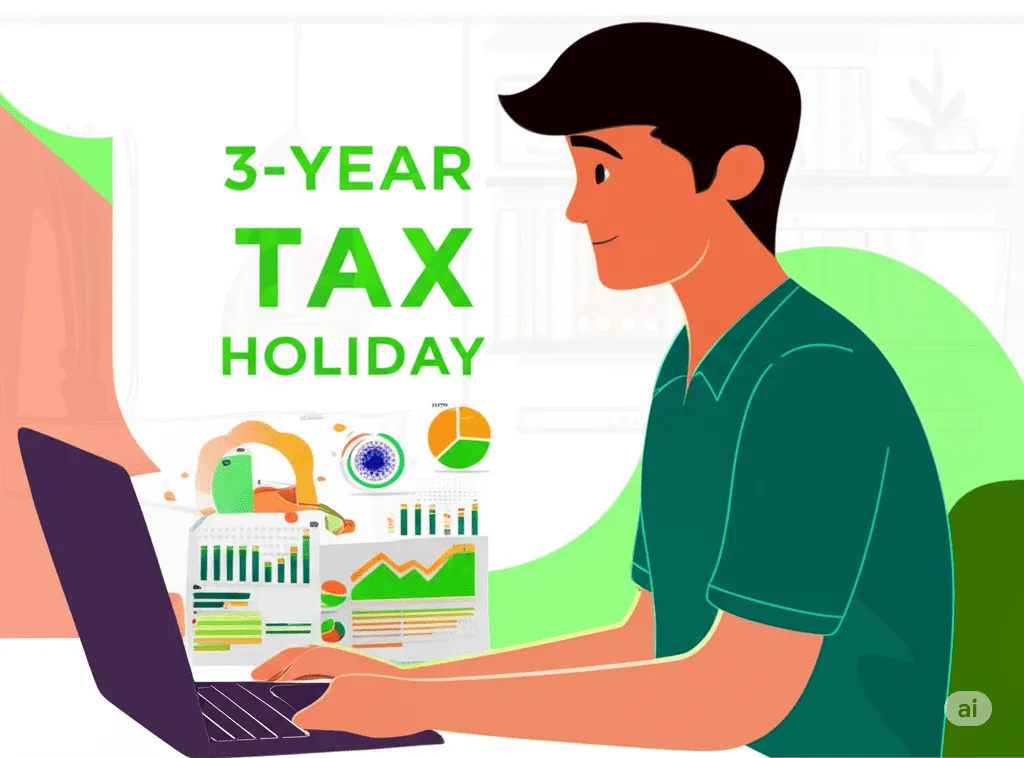
The income tax holiday for startups in India — a 100% profit deduction for any 3 consecutive years within your first 10 — remains one of the most powerful founder tools available in 2026, now open to startups incorporated through April 1, 2030. But DPIIT recognition alone does not activate it. A separate certification step — the Inter-Ministerial Board (IMB) approval — is the real gate, and as of April 2026, only about 2% of DPIIT-recognized startups have actually cleared it.
The income tax holiday for startups in India is one of the most powerful growth incentives available to early-stage founders — but most guides to it, including earlier versions of this one, stop at DPIIT recognition and imply the tax holiday follows automatically. It doesn’t. That gap is exactly where most founders lose the benefit without realizing they never had it.
Does DPIIT recognition automatically give me the tax holiday?
Direct answer: No — this is the single most important correction to make. DPIIT recognition is necessary but not sufficient. You must separately file Form 80-IAC on the Startup India portal and obtain a certificate from the Inter-Ministerial Board (IMB). As of April 2026, only about 3,700 of over 197,000 DPIIT-recognized startups — under 2% — actually hold the IMB certificate that unlocks the tax holiday. Most founders who believe they qualify have completed only the first of two required steps.
This is worth sitting with. 2.07 lakh-plus startups carry DPIIT recognition; roughly 3,700 have the IMB certificate that actually activates Section 80-IAC (now renumbered Section 140 under the new Income Tax Act 2025, effective April 1, 2026). The single biggest reason founders miss out isn’t ineligibility — it’s not knowing the IMB step exists as a separate, additional filing.
Four steps, in order — skipping or misunderstanding any one is why the uptake rate sits at 2%:
| Step | What it is | Common mistake |
|---|---|---|
| 1. DPIIT Recognition | Register on the Startup India portal; entity type, incorporation date, innovation description | Treating this as the finish line — it’s only the entry ticket |
| 2. IMB Certification | Separately file Form 80-IAC; Inter-Ministerial Board reviews and certifies eligibility | Not realizing this is a distinct filing — DPIIT status doesn’t carry over automatically |
| 3. Strategic year selection | Choose your 3 consecutive profit years within the first 10, based on real projections | Guessing instead of forecasting; picking years reactively after profit already happened |
| 4. Annual CA certification | Form 10-CCB confirms all conditions are met, filed each holiday year | Assuming one approval covers all three years automatically |
The principle: DPIIT recognition earns you the right to apply; the IMB certificate is what actually grants the exemption. Confirm with your CA exactly which stage your startup is at before assuming the holiday applies to you. Review our comprehensive SEO checklist for startups to complement your growth setup.

Instead of paying standard corporate tax on net income, eligible startups keep 100% of it for 3 years. The exemption isn’t automatic in Year 1 — you select any three consecutive years within your first 10 years of incorporation, and the incorporation window now runs through April 1, 2030 after the Union Budget 2025-26 extension.
The scale of the benefit is real: a startup earning meaningful profit across a well-chosen 3-year window can save a substantial amount in taxes — capital that funds hiring, product, or extended runway instead of leaving the business. Exact savings depend entirely on your profit trajectory and require a CA’s calculation — treat any example figure as illustrative, not a projection for your business.
The tax holiday gives you control — use it deliberately:
Match your window to these milestones with real financial projections, ideally modeled with your CA — a window chosen reactively, after a good year already happened, usually isn’t the optimal one.
Eligibility for DPIIT recognition itself:
But remember: this list gets you DPIIT recognition, not the tax holiday itself. The separate IMB certification via Form 80-IAC is the step that actually matters — don’t stop here.
Is the angel tax exemption still in effect in 2026?
Direct answer: Yes — it’s now permanent. Angel tax under Section 56(2)(viib) was abolished by the Finance Act 2024, effective April 1, 2025, and was not carried forward into the new Income Tax Act 2025. For DPIIT-recognized startups, this removes tax on investor capital entirely, and it can be stacked with the Section 80-IAC / Section 140 profit exemption for a two-sided capital advantage while raising and scaling simultaneously.
Critical: the 80-IAC / Section 140 holiday eliminates regular income tax on eligible profits — it does not eliminate Minimum Alternate Tax (MAT) under Section 115JB (now Section 206 in ITA 2025), levied at 15% of book profits. A startup in its holiday years can still owe MAT. This is, by multiple accounts, the single most common surprise founders encounter when their CA files the return — plan for it, don’t discover it.
DPIIT status combined with disciplined tax planning signals operator credibility. Building a strong personal brand is equally important; check out these common personal branding mistakes to avoid as an entrepreneur. Investors evaluating early-stage founders generally favor those who build lean, stay compliant, and protect margins. A properly activated tax holiday (not just DPIIT recognition on paper) can:
Cash retained through the exemption can fund first hires, better infrastructure, product marketing, or customer success — areas that compound growth without forcing a premature raise. That’s leverage, but it only materializes if the holiday is actually activated through the IMB certificate, not assumed from DPIIT status alone.

Beyond the headline tax holiday, IMB-certified and DPIIT-recognized startups may also access:
Confirm current applicability of each with your CA, since conditions attach to all of them.
For illustration only — not a projection. A bootstrapped B2B SaaS startup posts a loss in Year 1, then meaningful profit growth across Years 2–4. If it holds both DPIIT recognition and IMB certification, and its CA confirms all conditions across those years, the profits in a chosen 3-year window could be fully exempt from regular income tax — subject to MAT still applying at 15% of book profits. The actual number depends entirely on real financials, MAT calculations, and CA sign-off — get a specific projection from your accountant, not a blog post.
The income tax holiday for startups in India is a real financial tool, not a vague policy perk — but it only works if it’s actually activated, and DPIIT recognition alone doesn’t do that. The IMB certificate is the real gate, MAT still applies during the holiday, and the incorporation window now runs through 2030.
Treat DPIIT recognition as step one of a four-step process, not the finish line. The rest is forecasting, timing, IMB certification, and filing it correctly with a qualified CA every single year. You can also explore how digital marketing services can boost your ROI to make the most of your capital efficiency.
Tarasaka helps startups pair compliant, capital-efficient growth with digital strategy and founder branding. This article is informational, not tax advice — pair it with your CA’s guidance.

Roofing SEO Florida, USA The Florida Roofing Monopoly: Why 3 Companies Control 82% of Google Maps (And The Visibility Engineering™ Fix) Book a Free Strategy

Healthcare SEO Cost How Much Does Healthcare SEO Cost in India? Book a Free Strategy Call See Case Studies Healthcare SEO in India 2026: Pricing,

SEO Services Ahmedabad SEO Services in Ahmedabad 2027: Pricing, Strategies, Results & What to Expect Book a Free Strategy Call See Case Studies SEO Services