Blog
Why 3 Companies Control 82% of Google Maps (And The Visibility Engineering™ Fix)
Roofing SEO Florida, USA The Florida Roofing Monopoly: Why 3 Companies Control 82% of Google Maps (And The Visibility Engineering™ Fix) Book a Free Strategy
We now offer Free AI Visibility Audits. Find out if ChatGPT, Perplexity & Google AI can find your business. Claim yours →
By Saumya Patel | Content Writer | 4+ Years of Industry Experience | · Updated 2026 · ~14 min read
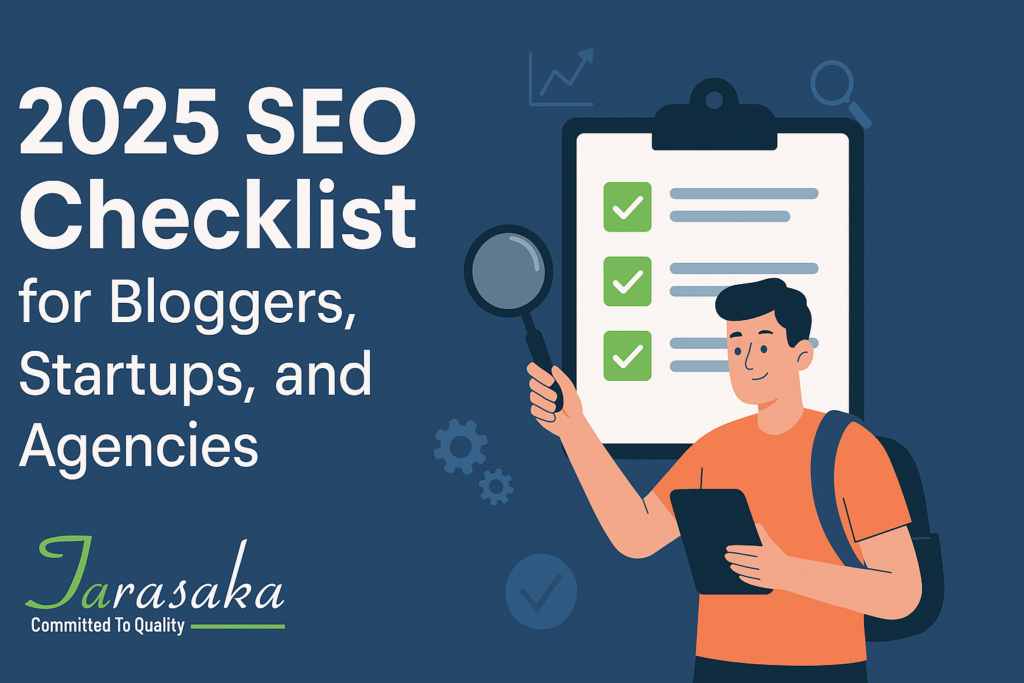
A 2026 SEO checklist that actually works isn’t ten equal boxes to tick — it’s ten items with very different weight. E-E-A-T, search intent, and mobile/speed carry the most, and 2026 brought a real update worth knowing: Google’s own official AI-optimization guide now says structuring for AI search is “just SEO,” not a separate discipline — including confirming llms.txt does nothing for rankings.
Let’s be real — every year, SEO people say “this is the year everything changes.” 2026? The AI-search shakeup is real, but here’s the twist almost nobody expected: Google spent this year telling everyone to calm down and go back to fundamentals.
Whether you’re a solo blogger, a scrappy startup, or juggling a dozen agency clients, this isn’t another “do everything” list. It’s a scored checklist — point values attached, so you know what to fix first — with the 2025 version’s AI-search advice corrected against what actually happened this year.
Each item below carries real weight, not equal weight. Score yourself honestly as you go, then check your total against the band at the bottom.
| # | Item | Points |
|---|---|---|
| 1 | Search intent matched, not just keyword-stuffed | 12 |
| 2 | E-E-A-T signals present (author, credentials, trust) | 15 |
| 3 | Mobile-first, tested on a real phone | 10 |
| 4 | Core Web Vitals passing, fast load | 10 |
| 5 | Old content updated, not just new posts published | 10 |
| 6 | Schema markup (FAQ, Article, Product) implemented | 10 |
| 7 | Structured for AI search — the right way, per 2026 guidance | 10 |
| 8 | Smart internal linking with descriptive anchors | 8 |
| 9 | Technical basics: sitemap, robots.txt, HTTPS | 8 |
| 10 | Tracking and testing set up (GA4, Search Console) | 7 |
Scoring Band:
80–100: Competitive in most niches.
50–79: Real gaps, but a clear next step.
Below 50: Start with items 1–4 — they carry over a third of the total weight between them.
Google’s obsession with intent hasn’t slowed down. Before picking a keyword, ask what problem your target reader actually wants solved — tools that surface question-based and intent-gap keywords are more useful here than raw volume data.
This carries the most weight on the list, and it’s the item most bloggers and small sites skip. Google wants to see Experience, Expertise, Authoritativeness, and Trustworthiness — everywhere, not just on an About page nobody reads.
Check your site on an actual phone, not just a browser simulator. Is the font readable without zooming? Are buttons easy to tap without mis-hits? Does it load quickly? If you’re still failing Core Web Vitals on mobile, this is the year to fix it — not next year.
Does page speed still matter for SEO in 2026?
Direct answer: Yes, more than ever. Page speed and user experience remain direct ranking factors, and the conversion cost of slow pages is now well quantified — roughly 1% of conversions lost per 100 milliseconds of load time. Run PageSpeed Insights and fix every yellow and red warning, optimize images (modern formats like WebP or AVIF), and strip unnecessary plugins and scripts, especially on WordPress.
For the deeper numbers behind why this matters so much, see our breakdown in Web Design Services USA.
If your blog posts, landing pages, or resource hubs are collecting dust, update them before you write something new. Add fresh, dated stats, fix broken links and outdated steps, and work in current keyword variations naturally. Content refreshes routinely outperform new posts for a well-established site, simply because they’re inheriting existing authority instead of starting from zero.
It sounds geeky, but FAQ, Article, and Product schema can be the difference between a plain blue link and a featured snippet. Add FAQ schema to relevant posts, mark up how-tos, reviews, and products with correct JSON-LD, and double-check your work with Google’s Rich Results Test.
How should I structure content for AI search (AIO/GEO) in 2026?
Direct answer: The same way you’d structure it for good SEO — Google’s own official AI-optimization guide, published and updated through 2026, states plainly that AI Overviews and AI Mode pull from the same index and ranking systems as classic search. That means clear structure, direct answers, bullet points and tables, and genuine E-E-A-T are what get you cited — not AI-specific markup, AI-only rewriting, or files like llms.txt, which Google has confirmed do nothing for visibility.
This is the biggest correction from the 2025 version of this checklist: AIO and GEO didn’t turn out to be a separate discipline requiring separate tactics. Google effectively folded the vocabulary back into plain SEO in 2026. Practically, that still means: structure content so AI systems can extract and summarize it cleanly, lead with bullet points and concise summaries, and answer common questions directly — but skip anything sold as an ‘AI-only’ hack. For comprehensive strategies, explore our full suite of SEO services, read the full myth-bust at LLMs.txt vs Normal SEO, and for practical AI-assisted workflows, see how to use ChatGPT for SEO.
Connect related posts, service pages, and resources to each other deliberately. Use descriptive anchor text — “SEO checklist for startups” beats “click here” every time — and go back and link older content to new posts, not just the reverse.
Boring, essential, and still where a surprising number of sites quietly fail. Keep an up-to-date XML sitemap, double-check robots.txt isn’t accidentally blocking something important, and make sure every page runs HTTPS — no exceptions in 2026.
Set up Google Analytics 4 and Search Console if you haven’t. Track which keywords, pages, and posts actually bring in traffic, run regular audits with a crawler tool, and don’t be afraid to test new headlines, meta descriptions, or layouts — SEO rewards iteration, not a one-time setup.
Feel free to copy, save, or print:
If you’re tired of checklists that read like a 90s instruction manual, you’re not alone. SEO in 2026 is still about clarity, real value, and a user-first experience — not magic tricks, and definitely not the AI-specific hacks that got sold hard in 2025 and quietly confirmed useless in 2026.
Score yourself against the Priority Stack, fix the highest-weighted gaps first, and skip the fluff.
Drop it in the comments, or reach out to Tarasaka — we love sharing what actually works.
What's new in SEO checklists for 2026?
The biggest shift is the AI-search correction: Google’s official 2026 guidance confirmed AI Overviews and AI Mode run on the same ranking systems as classic search, and specific tactics like llms.txt files don’t help. Beyond that, E-E-A-T and search intent carry more relative weight than ever.
How often should I update my SEO checklist?
At least once a year, but treat major platform announcements as a trigger to check sooner — a checklist can go stale within months in a fast-moving area like AI search, which is exactly what happened to the AIO/GEO advice in this checklist’s 2025 version.
Are there different SEO priorities for bloggers, startups, and agencies?
The weighting shifts slightly by context — bloggers benefit most from content updates and E-E-A-T, startups from technical foundations and analytics, agencies from internal linking and schema consistency across multiple client sites — but all ten checklist items apply to all three.
Does AI content help or hurt my SEO in 2026?
Neither, by itself. Google evaluates content on quality and usefulness regardless of how it was drafted. AI-assisted content that’s edited, fact-checked, and genuinely useful performs fine; unedited, generic AI output performs the way thin, generic content always has.

Saumya Patel is a Content Writer at Tarasaka Digital Solutions with over 4 years of experience creating SEO-focused content for businesses across multiple industries. Her areas of expertise include SEO, Local SEO, AI SEO, AEO (Answer Engine Optimization), GEO (Generative Engine Optimization), content strategy, and digital marketing.
At Tarasaka Digital Solutions, Saumya researches search trends, analyzes ranking factors, studies AI search behavior, and creates evidence-based content designed to help businesses improve online visibility, attract qualified leads, and build long-term organic growth. His content is developed using industry best practices, competitor analysis, and real-world search marketing insights to ensure accuracy, relevance, and practical value for readers.
Roofing SEO Florida, USA The Florida Roofing Monopoly: Why 3 Companies Control 82% of Google Maps (And The Visibility Engineering™ Fix) Book a Free Strategy

Healthcare SEO Cost How Much Does Healthcare SEO Cost in India? Book a Free Strategy Call See Case Studies Healthcare SEO in India 2026: Pricing,

SEO Services Ahmedabad SEO Services in Ahmedabad 2027: Pricing, Strategies, Results & What to Expect Book a Free Strategy Call See Case Studies SEO Services