Blog
Why 3 Companies Control 82% of Google Maps (And The Visibility Engineering™ Fix)
Roofing SEO Florida, USA The Florida Roofing Monopoly: Why 3 Companies Control 82% of Google Maps (And The Visibility Engineering™ Fix) Book a Free Strategy
We now offer Free AI Visibility Audits. Find out if ChatGPT, Perplexity & Google AI can find your business. Claim yours →
By Saumya Patel | Content Writer | 4+ Years of Industry Experience | · Updated 2026 · ~13 min read
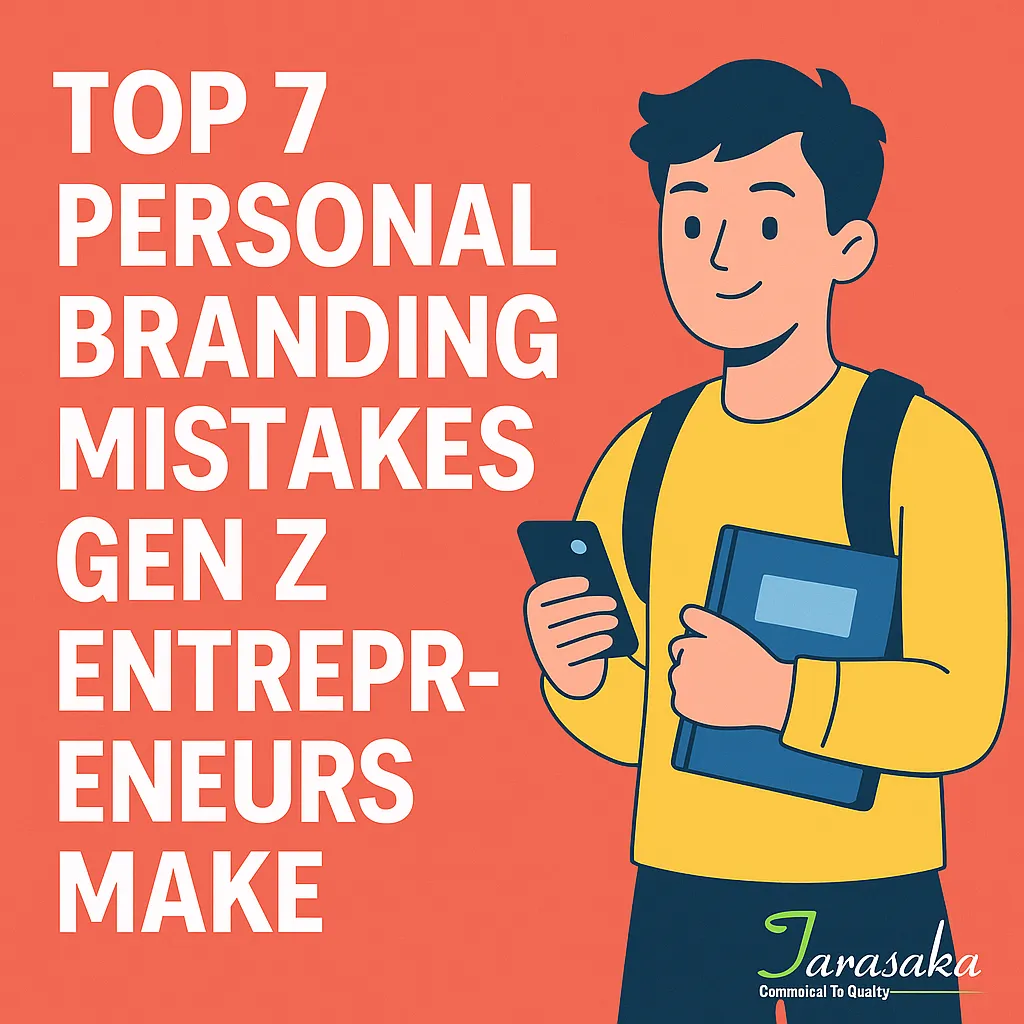
The most damaging personal branding mistakes Gen Z entrepreneurs make aren’t equal. Skipping a clear brand story and a real unique value proposition blocks trust from forming at all — nothing else on this list matters until those exist. Inauthenticity and vanity-metric chasing erode trust after it’s built. And 73% of Gen Z actively avoid people and brands that feel ‘try-hard’, which makes authenticity mistakes especially costly for this audience specifically.
Gen Z is leading a new wave of entrepreneurship — creative, digital-first, and eager to build a real identity around their work. Social media makes building an individual brand easier than ever, but that same ease is exactly why so many Gen Z founders fall into the same handful of traps.
Personal branding isn’t a nice-to-have anymore — it’s a real driver of trust and opportunity. 70% of employers now say a strong personal brand matters more than a résumé, and 84% of consumers say a company’s reputation is shaped by the personal brands of the people behind it. If you want to stand out, earn confidence, and grow your influence, make sure you’re not making these seven mistakes — and fix them in the order that actually moves the needle.
Most personal branding advice treats every mistake as equally damaging. It isn’t. Some mistakes stop trust from forming in the first place; others erode trust you’ve already earned; a third group limits how far that trust can travel. Fix them in this order:
| Tier | Mistakes it covers | Why it comes first/last |
|---|---|---|
| 1. Foundation | No clear brand story, no UVP, inconsistent messaging | Blocks trust from forming — nothing else works until this exists |
| 2. Erosion risk | Chasing vanity metrics, oversharing/inauthenticity | Damages trust after it’s built — the fastest way to lose ground |
| 3. Reach limiter | Skipping offline networking, never monitoring or adapting | Caps how far and how durably your brand compounds over time |
The principle: you can’t erode trust you never built, and you can’t grow reach on a foundation that isn’t there. A founder chasing followers before defining a real story is optimizing the wrong tier entirely.
Every strong personal brand rests on a real story — and most Gen Z entrepreneurs simply haven’t spent the time to define and share theirs. People don’t just want to know what you do; they want to know why.
Why it matters: an authentic backstory creates emotional connection and separates you from everyone else offering something similar. Personal brands built on real storytelling see meaningfully higher audience loyalty than those that skip this step entirely. Aligning your story with a solid digital marketing framework guarantees your narrative reaches the right audience.
Action step: think through your actual journey — what inspired you to start, what you’ve genuinely struggled with — and share that “why” consistently in your bio, content, and interviews.
Your unique value proposition is what makes you genuinely different — not just present — in your audience’s eyes. Many Gen Z founders skip this entirely, which leaves them blending into a crowd of people offering something similar.
Why it matters: a strong UVP is the actual reason someone chooses you over anyone else — it’s the core of the brand, not a decoration on top of it.
Action step: ask directly — ‘what is the one thing only I can offer?’ It might be a specific skill, a distinct perspective, or a genuinely different approach to a common problem.
Your LinkedIn bio, Instagram profile, and even your business email signature should all communicate the same core message about who you are and what you stand for.
Why it matters: people notice when your story or tone shifts from platform to platform. Consistent messaging builds trust and makes you memorable — inconsistency quietly undermines both.
Quick tip: lock in a set of core values, consistent visuals (a color palette, a simple logo), and one clear one-sentence description you use everywhere online.
It’s easy to get pulled into chasing likes and followers. But personal branding runs far deeper than the social metrics dashboard. What actually matters is how much you help, teach, and inspire — not how many people double-tap a single post.
Why it matters: brands built purely on trends or viral moments fade quickly. This lines up with a broader shift in how Gen Z evaluates trust: 72% now trust customer reviews and independent research more than influencer-led messaging — real, verifiable value increasingly outweighs raw visibility.
Quick tip: balance your online presence with offline substance — join business communities, attend real events, or write for publications and platforms beyond your own social feed. You can explore our case studies to see how real-world, verifiable outcomes drive long-term reputation.
Personal brands genuinely thrive on authenticity — but there’s a real line between being open and oversharing for attention. Posting purely for engagement, or performing a version of yourself that isn’t real, tends to backfire.
Why it matters: this is the mistake with the clearest, most direct cost for this specific audience. 73% of Gen Z actively avoid brands and people who come across as ‘try-hard’ or inauthentic — and Gen Z audiences are unusually fast at spotting the difference between real and performed.
Action step: before posting, ask honestly — does this represent who I actually am, and is it relevant to my brand? Share real stories, lessons, and challenges, but keep clear boundaries around what stays private.
Some Gen Z entrepreneurs assume social media connections are enough on their own. In practice, in-person and professional networking still carries real weight for personal branding — opportunities frequently come from relationships built outside your usual online circles.
Why it matters: mentors, collaborators, and investors often surface through events, LinkedIn engagement, or business communities — not purely through follower counts.
Quick tip: build networking into your brand strategy as a regular habit — attend meetups and webinars, and use LinkedIn to genuinely engage, not just to collect connections.
The digital landscape shifts quickly, and a personal brand that doesn’t shift with it starts to feel dated. A common mistake is never checking how your community is actually responding — or ignoring the response when it’s negative.
Why it matters: feedback, both positive and negative, is what lets a brand actually grow. The brands — personal or corporate — that adapt are the ones that stay relevant; the ones that don’t, don’t. Learn how smart businesses adapt their reach by mastering content marketing strategies to increase traffic.
Quick tip: regularly search your own name, review your profiles with fresh eyes, and ask people you trust for honest feedback. Update your brand as needed to keep it current and genuine.
Personal branding for Gen Z entrepreneurs is more important than ever — but treating all seven mistakes as equally urgent is itself a mistake. Fix the foundation first: a real story, a genuine UVP, and consistent messaging. Guard against the mistakes that erode trust once it exists. Then use networking and regular review to compound what you’ve built.
Remember: your brand is your reputation. Audit it honestly, and fix it in the order that actually moves the needle.
Start today: audit your current profiles, clarify your message, and connect authentically. Want expert input?
What are the most common personal branding mistakes for Gen Z?
Inconsistent messaging, no clear brand story, chasing social popularity over real value, no unique value proposition, oversharing or inauthenticity, neglecting offline networking, and failing to monitor and adapt the brand over time. The first three block trust from forming; the rest erode or limit it once it exists.
How do Gen Z entrepreneurs build a strong personal brand?
Start with the foundation: a real, specific brand story and a clear unique value proposition, delivered consistently across every platform. Then protect that trust by staying authentic and avoiding vanity-metric chasing, and compound it through genuine networking and regular, honest self-review.
Why is consistency important in personal branding?
Because people notice when your story or tone shifts between platforms, and inconsistency quietly undermines the trust you’re trying to build. A consistent core message — values, visuals, and a clear one-line description — makes you recognizable and credible across every place someone encounters you.
How can I find my unique value as a Gen Z entrepreneur?
Ask directly what only you can offer — a specific skill, a distinct perspective shaped by your own experience, or a genuinely different approach to a problem others solve conventionally. A real UVP is specific enough that a stranger could repeat it back accurately after hearing it once.
Is social media enough for building a personal brand in 2026?
No. Gen Z increasingly weighs independent validation — reviews, research, real-world reputation — more heavily than influencer-style content alone; 72% now trust customer reviews and independent research over influencer messaging. A brand built purely on one platform’s reach is fragile and incomplete.
Saumya Patel is a Content Writer at Tarasaka with over 4 years of experience creating SEO-focused content for businesses across multiple industries. Her areas of expertise include SEO, Local SEO, AI SEO, AEO (Answer Engine Optimization), GEO (Generative Engine Optimization), content strategy, and digital marketing.
At Tarasaka, Saumya researches search trends, analyzes ranking factors, studies AI search behavior, and creates evidence-based content designed to help businesses improve online visibility, attract qualified leads, and build long-term organic growth. His content is developed using industry best practices, competitor analysis, and real-world search marketing insights to ensure accuracy, relevance, and practical value for readers.
Roofing SEO Florida, USA The Florida Roofing Monopoly: Why 3 Companies Control 82% of Google Maps (And The Visibility Engineering™ Fix) Book a Free Strategy

Healthcare SEO Cost How Much Does Healthcare SEO Cost in India? Book a Free Strategy Call See Case Studies Healthcare SEO in India 2026: Pricing,

SEO Services Ahmedabad SEO Services in Ahmedabad 2027: Pricing, Strategies, Results & What to Expect Book a Free Strategy Call See Case Studies SEO Services