
Blog
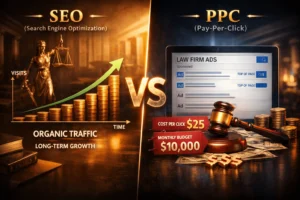
Law Firm SEO vs PPC: Which Generates More Legal Clients in 2026?
Law firm seo vs ppc Law Firm SEO vs PPC: Which Generates More Legal Clients in 2026 Book a Free Strategy Call See Case Studies


By Saumya Patel | Content Writer | 4+ Years of Industry Experience | Updated 2026 · ~17 min read
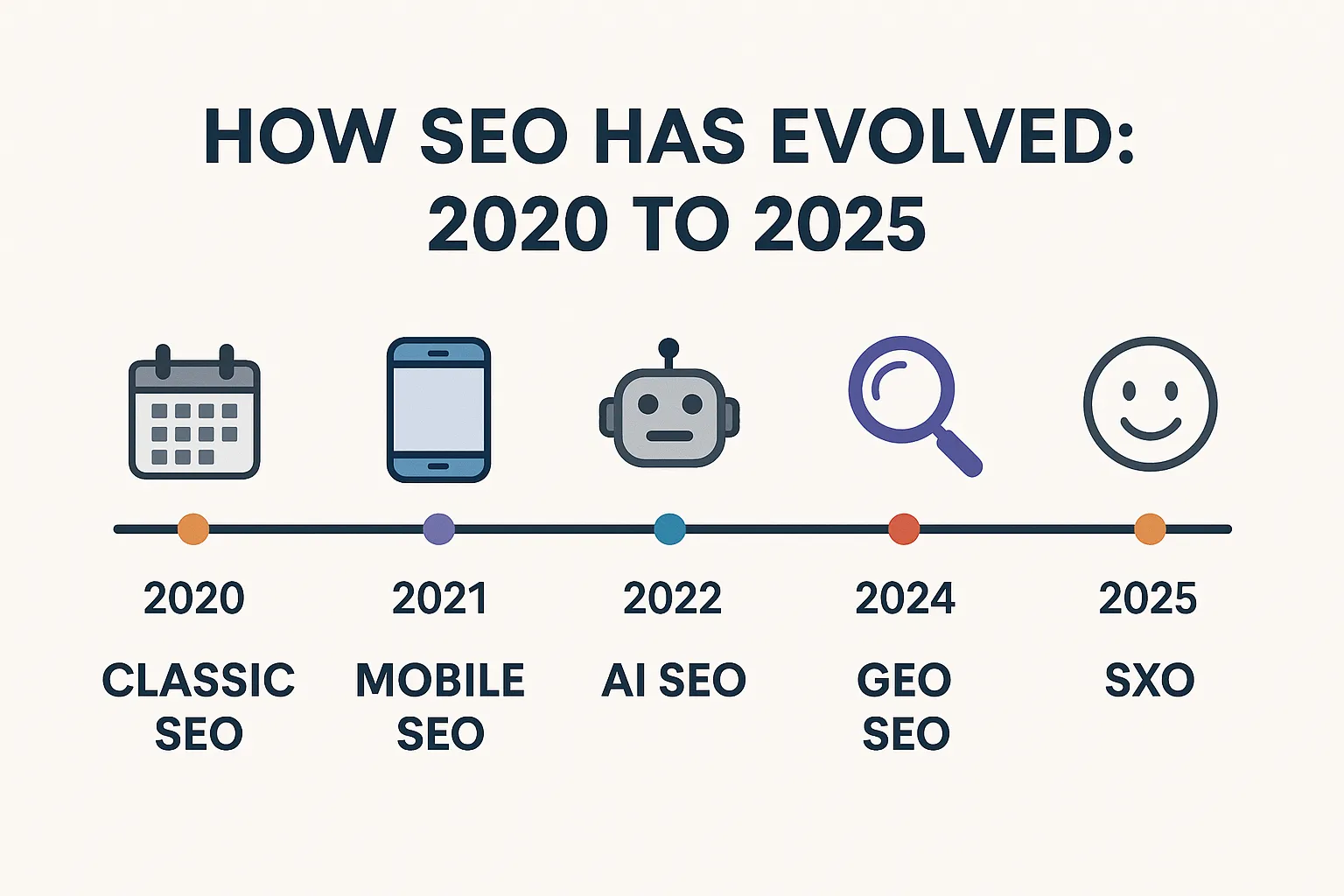
SEO in 2026 is still built on user intent, E-E-A-T, and technical health — but several 2025-era claims about it need correcting. FID was replaced by INP as a Core Web Vital back in March 2024, and Google’s own 2026 guidance folded ‘AIO’ and ‘GEO’ back into plain SEO rather than treating them as separate disciplines. This guide is the orientation map — what’s genuinely changed, what’s been corrected, and where to go for the deeper how-to on each piece.
SEO in 2026 isn’t only about keywords — it’s about understanding user intent, using AI well, and delivering a strong experience at every digital touchpoint. The landscape keeps shifting with new algorithm behavior, AI advancement, and changing search habits, which makes staying current genuinely important for business owners, agencies, and in-house teams alike.
This guide is the top-level map: what’s actually changed, what 2025-era advice needs correcting, and where to find the deeper, tactical breakdown of each piece — rather than repeating everything in one place.
The core shift hasn’t reversed — Google’s algorithms weigh user intent, E-E-A-T, and direct-answer quality more heavily than raw keyword matching. What’s new for 2026 is how much of that shift has now been confirmed officially, rather than inferred from conference comments and blog speculation.
Several claims that circulated widely through 2025 needed correcting once Google’s own 2026 guidance and documented technical changes caught up. Check your own team’s assumptions against this table:
| 2025-era claim | 2026 status |
|---|---|
| AIO and GEO are separate disciplines with their own tactics | Corrected — Google’s official 2026 AI-optimization guide folds this back into plain SEO. Structure and clarity still matter; there’s no separate rulebook. |
| Publish on Quora/Wikipedia/LinkedIn specifically to ‘reach AI engines’ | Vague and largely outdated — AI Overviews draw from Google’s own crawled index, the same one classic search uses, not a special set of platforms. |
| Core Web Vitals include LCP, FID, and CLS | Outdated — INP replaced FID as the responsiveness metric in March 2024; any current guide still listing FID needs updating. |
| llms.txt helps you get cited in AI Overviews | False — confirmed directly by Google; see our dedicated breakdown on LLMs.txt vs Normal SEO for the full explanation. |
| ‘Algorithm update’ names spread quickly online should be taken at face value | Verify against Google’s own materials first — not every viral ‘update’ name describes what it’s claimed to. Read our truth check on the Google MUVERA algorithm. |
The pattern across all five corrections: verify against Google’s own primary sources before adjusting strategy, not against how many other SEO blogs repeat the same claim.
What are AIO and GEO, and are they different from SEO?
Direct answer: AIO (AI Optimization) and GEO (Generative Engine Optimization) describe structuring content so AI systems can extract, summarize, and cite it clearly — clear headings, direct answers, tables, and FAQs. As of 2026, Google’s own official AI-optimization guidance treats this as an emphasis within SEO, not a separate discipline with its own rules. The same fundamentals — helpful content, E-E-A-T, clean structure — drive both classic rankings and AI-search visibility.
Practical AIO/GEO work still means: write clear, direct answers near the top of a section; use headings, bullets, and tables; keep FAQ content genuinely useful; and maintain accurate, current information.
SXO covers the entire user journey — from the search result, through the page itself, to conversion. It matters because ranking without converting is a wasted click.
What are the current Core Web Vitals in 2026?
Direct answer: Three metrics: Largest Contentful Paint (LCP, target under 2.5 seconds), Interaction to Next Paint (INP, target under 200 milliseconds), and Cumulative Layout Shift (CLS, target under 0.1). INP replaced First Input Delay (FID) as the responsiveness metric in March 2024 — any current guide still listing FID as a Core Web Vital is out of date. Google measures all three against real-user data at the 75th percentile, not lab-only test scores.
| Metric | Measures | 2026 target |
|---|---|---|
| LCP (Largest Contentful Paint) | Loading speed | Under 2.5 seconds |
| INP (Interaction to Next Paint) | Responsiveness — replaced FID in March 2024 | Under 200 milliseconds |
| CLS (Cumulative Layout Shift) | Visual stability | Under 0.1 |
Worth knowing: INP is now the metric most sites fail — a meaningful share of sites still miss the 200ms threshold in 2026, and it typically requires deeper JavaScript and rendering changes than LCP or CLS to fix. For the fuller performance picture and why speed moves conversions specifically, see our Web Design Services USA overview.
Beyond Core Web Vitals, the rest of the technical foundation is unchanged in substance:
Content remains the foundation — context is what separates content that ranks from content that doesn’t.
Google continues to reward Experience, Expertise, Authoritativeness, and Trust — real author information, genuine case studies, and demonstrated expertise. This hasn’t weakened with the rise of AI search; if anything, Google’s 2026 guidance treats E-E-A-T as foundational to AI-search visibility too, not a separate, older consideration.
SEO in 2026 is a mix of AI-search reality, genuine experience signals, and the same technical fundamentals that have mattered for years — just with a few widely-repeated 2025-era claims that needed correcting along the way.
Start by auditing your current site against the Reality Check table above, fix the technical basics (especially INP), and build content around real expertise rather than chasing every new acronym.
Law firm seo vs ppc Law Firm SEO vs PPC: Which Generates More Legal Clients in 2026 Book a Free Strategy Call See Case Studies

Local Businesses Rank In Google How Local Businesses Can Rank in Google AI Overviews in 2026 Book a Free Strategy Call See Case Studies FAQ
Local Law Firm SEO Law Firm SEO Guide: How Lawyers Rank #1 on Google Representative results from a client engagement. Identity protected by NDA. Book