Blog
Why 3 Companies Control 82% of Google Maps (And The Visibility Engineering™ Fix)
Roofing SEO Florida, USA The Florida Roofing Monopoly: Why 3 Companies Control 82% of Google Maps (And The Visibility Engineering™ Fix) Book a Free Strategy
We now offer Free AI Visibility Audits. Find out if ChatGPT, Perplexity & Google AI can find your business. Claim yours →
By Saumya Patel | Content Writer | 4+ Years of Industry Experience | · Updated 2026 · ~14 min read
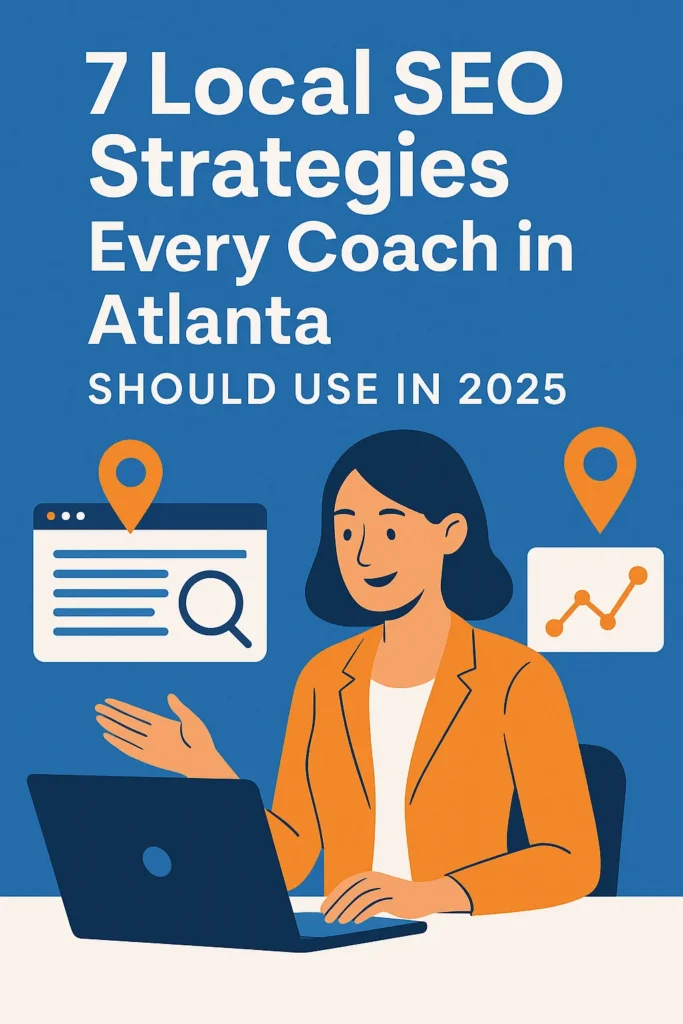
Local SEO strategies for coaches in Atlanta work differently than for a dentist or roofer, because most coaches don’t have a public storefront. The fix isn’t a fake or masked address — that risks a Google Business Profile suspension — it’s setting up a proper Service Area Business profile, building genuinely distinct neighborhood content for Midtown, Buckhead, Decatur, and beyond, and earning real (not scripted) reviews. Coaches who get this structure right in 2026 out-rank national competitors who never geo-optimize at all.
The coaching scene is booming across Midtown, Buckhead, and Decatur. But unless your name shows up when someone searches “career coach near me,” you’re handing that lead to someone else — even if your coaching is better.
This guide keeps the seven-part structure that works, but fixes two pieces of advice that can genuinely put your listing at risk, and adds the framework most coach-specific local SEO content skips entirely: how to build real local relevance without a physical office.
A dentist or a roofer has a fixed location and a defined service radius — the entire local SEO playbook is built around that. A coach usually doesn’t: many work from home, serve clients across the metro or entirely online, and have no public-facing office to anchor a listing to. That structural difference changes what “doing local SEO correctly” actually means, and it’s exactly where the most common, most damaging mistakes happen.
Five steps, built for a service-area business rather than a physical location:
| Step | What it covers | Why it matters for coaches specifically |
|---|---|---|
| 1. Correct GBP setup | Service Area Business profile — address hidden, service areas defined | Avoids the suspension risk of a fake or masked address |
| 2. Real neighborhood pages | Genuinely distinct content per area served, not templated | Coaches serve multiple neighborhoods without a branch office in each |
| 3. Genuine review system | Authentic, unprompted reviews — never scripted | Coaching reviews reference trust and outcomes; scripted ones read as fake |
| 4. Schema + technical foundation | LocalBusiness + FAQ schema, Core Web Vitals | Standard trust and extraction signals, same as any local business |
| 5. Local authority signals | Backlinks and mentions from real Atlanta organizations | Substitutes for the physical-presence trust a storefront provides automatically |
The principle: everything in steps 2–5 exists to build the local trust a storefront gives other businesses for free. Skipping step 1’s correct setup, or trying to shortcut it with a fake address, undermines everything built on top of it.
Should a home-based coach use a fake or masked address on Google Business Profile?
Direct answer: No — this violates Google’s guidelines and risks profile suspension. If you work from home and don’t see clients at a public-facing address, set your profile up correctly as a Service Area Business: hide your street address and define the specific areas you serve (Midtown, Buckhead, Decatur, etc.). This is Google’s own supported path for exactly this situation, and it carries none of the risk that comes with a virtual or masked address.
Beyond the correct address setup, optimize the profile fully: select the right coaching category, list specific services (executive coaching, confidence coaching, career coaching), and upload real, professional photos. A complete, correctly configured profile is what gets you into the Map Pack — the top three local results people actually click.
You likely coach clients across Midtown, Buckhead, Sandy Springs, and East Point — not just “Atlanta” as one undifferentiated area. Build a genuinely distinct page per area: a real intro about that neighborhood, testimonials from clients there if you have them, an embedded map, and a clear contact CTA.
The word genuinely matters. A page that’s just the same template with the neighborhood name swapped reads as thin content to Google — and increasingly, to AI search systems too. If you don’t have real local specificity to add for a given area, it’s better to have fewer, stronger pages than many templated ones. Understanding local SEO for small businesses in the USA can help you tailor these landing pages effectively.
Schema markup helps Google read your content clearly and can surface FAQ snippets, location cards, and featured results. Add LocalBusiness schema (service area, map link, phone) and FAQ schema built from the real questions you get during consultations, via JSON-LD or a plugin like RankMath. This supports visibility in the zero-click and AI-answer landscape without requiring any AI-specific tactics — standard schema is the actual lever.
Is it okay to ask clients to include specific keywords in their Google reviews?
Direct answer: No — asking clients to write reviews containing pre-written phrases (‘[Name] is the best business coach in Atlanta’) violates Google’s review policies, which require reviews to reflect genuine, unprompted customer experience. It also reads as inauthentic to prospective clients. Ask for honest feedback instead, and let clients describe their own experience in their own words.
Review recency and consistency genuinely do move local rankings — ten fresh, real reviews in the last three months outweighs a stale pile from a year ago. Learn more about how to analyze Google Maps ranking signals to maximize profile trust. Ask every client for honest feedback after a meaningful session or milestone, spread requests out naturally rather than in one push, and respond to every review — that responsiveness signals activity to Google and reassurance to prospective clients.
Your blog is a content engine for niche-plus-location keywords, not just a place to share general advice. Strong topic patterns for Atlanta coaches:
Write your focus keyword naturally, as part of a real sentence answering a real question — not stuffed in for its own sake.
Local backlinks matter even for a niche practice. Target Georgia coaching organizations, Atlanta business directories, and local podcasts or wellness publications. Even one or two genuinely Atlanta-based backlinks can outrank a national competitor with a bigger site but zero geographic relevance. A sponsored local event or a guest article for an Atlanta-focused publication is a realistic way to start.
Google weighs user experience alongside content relevance. The practical checklist:
Link every location- or niche-specific blog post back to your main coaching services page, and let that page link back out to the location content. This builds topical depth and helps search engines — and AI systems — understand the full scope of what you offer and where.
How long does local SEO take to work for a coach in Atlanta?
Direct answer: Most coaches see initial movement within 6–12 weeks of consistent, correctly-structured work, with stronger results by 3–6 months. Highly competitive niches or terms can take longer. Coaches who fix the Service Area Business setup and review system first typically move faster than those spreading effort evenly across all seven tactics from day one.
SEO doesn’t have to be technical or intimidating, but ignoring it costs leads you’ll never see going to a competitor instead. In a market like Atlanta — where coaching is booming across executive development, mindset work, and business strategy — visibility genuinely is leverage.
Set your Google Business Profile up correctly as a service area business, build real neighborhood content, earn genuine reviews, and let the rest compound.
Get a free local SEO audit from Tarasaka, built around the No-Storefront Playbook. Explore our specialized SEO services for coaches & consultants.
How long does local SEO take to work in Atlanta?
Most coaches see initial movement within 6–12 weeks of consistent, correctly-structured work, with stronger results by 3–6 months. Highly competitive niches or terms can take longer. Fixing the Google Business Profile setup and review system first typically speeds up results.
Do I need SEO if I'm already on Instagram or Facebook?
Yes — they serve different intent. Social platforms build awareness and reach; someone searching ‘career coach near me’ on Google is much closer to booking. SEO captures that high-intent search moment that social reach alone doesn’t.
What's the most important ranking factor for coaches in 2026?
For a service-area business without a storefront, a correctly configured Google Business Profile (set up as a Service Area Business, not a fake address) combined with genuine, recent reviews carries the most weight — both are foundational to appearing in the Map Pack.
Yes, when it’s built around real client questions and niche-plus-location topics rather than generic motivational content. That specificity is what captures actual search intent and builds topical authority — generic lifestyle content rarely ranks for anything competitive.
Saumya Patel is a Content Writer at Tarasaka with over 4 years of experience creating SEO-focused content for businesses across multiple industries. Her areas of expertise include SEO, Local SEO, AI SEO, AEO (Answer Engine Optimization), GEO (Generative Engine Optimization), content strategy, and digital marketing.
At Tarasaka, Saumya researches search trends, analyzes ranking factors, studies AI search behavior, and creates evidence-based content designed to help businesses improve online visibility, attract qualified leads, and build long-term organic growth. His content is developed using industry best practices, competitor analysis, and real-world search marketing insights to ensure accuracy, relevance, and practical value for readers.
Roofing SEO Florida, USA The Florida Roofing Monopoly: Why 3 Companies Control 82% of Google Maps (And The Visibility Engineering™ Fix) Book a Free Strategy

Healthcare SEO Cost How Much Does Healthcare SEO Cost in India? Book a Free Strategy Call See Case Studies Healthcare SEO in India 2026: Pricing,

SEO Services Ahmedabad SEO Services in Ahmedabad 2027: Pricing, Strategies, Results & What to Expect Book a Free Strategy Call See Case Studies SEO Services