
Blog
Law Firm SEO vs PPC: Which Generates More Legal Clients in 2026?
Law firm seo vs ppc Law Firm SEO vs PPC: Which Generates More Legal Clients in 2026 Book a Free Strategy Call See Case Studies
We now offer Free AI Visibility Audits. Find out if ChatGPT, Perplexity & Google AI can find your business. Claim yours →

On June 12, 2025, tragedy struck when Air India Flight 171, a Boeing 787-8 Dreamliner en route from Ahmedabad to London Gatwick, crashed within seconds of takeoff, claiming 241 lives on board and 33 on the ground. The Air India Flight 171 Ahmedabad Plane Crash is now considered one of India’s deadliest aviation disasters and the first fatal hull loss involving the Boeing 787 Dreamliner. For a deeper breakdown of this tragic event, read our detailed analysis on the Air India Flight 171 Ahmedabad plane crash on June 12.
While rescue teams acted swiftly, the accident has also put a spotlight on the importance of digital readiness during emergencies. At Tarasaka, we believe that crisis situations demand fast, accessible, and verified digital communication to reduce chaos and save lives.
| Date | June 12, 2025 |
| Time | 13:38 IST |
| Flight & Aircraft | Air India Flight 171 (Boeing 787-8, VT-ANB) |
| Route | Ahmedabad (India) → London Gatwick (UK) |
| People On Board | 230 Passengers | 12 Crew Members |
| Fatalities | 241 Onboard | 33 On Ground |
| Survivor | 1 (British citizen, seated near emergency exit) |
Just 30 seconds after takeoff from Runway 23, the aircraft issued a mayday call before crashing into the hostel building of B.J. Medical College in Meghaninagar, Ahmedabad. Eyewitnesses described a plunge followed by multiple explosions and massive plumes of smoke. The crash site was just 1.5 km from the runway.
While the official cause is under investigation by the Aircraft Accident Investigation Bureau (AAIB), early signs suggest:
Tarasaka emphasizes that in such events, verified data must reach families and the public instantly. Speed, clarity, and reliability are essential.
The manifest included 230 passengers and 12 crew members (2 pilots, 10 cabin crew):
Survivor: A 40-year-old British national (seat 11A) escaped due to fuselage detachment and proximity to the emergency exit. Many onboard were students, professionals, and families returning to the UK. Gujarat’s former Chief Minister Vijay Rupani was among those lost.
The plane hit the doctors’ quarters and hostel buildings of B.J. Medical College during lunch hours, resulting in 33 confirmed ground fatalities, over 50 students hospitalized, and 10–12 individuals trapped in the wreckage.
A massive rescue operation was launched immediately:
During the Air India Flight 171 Ahmedabad Plane Crash, timely access to data was critical, highlighting significant gaps in emergency readiness:
Tarasaka builds emergency-ready web systems through tailored website development that enables businesses and public bodies to deliver real-time alerts, manage traffic spikes, and ensure data accuracy when it matters most.
For Airlines:
For Digital Teams:
The Air India Flight 171 Ahmedabad Plane Crash is not just a national tragedy—it is a call for stronger digital communication, faster response systems, and greater coordination between airlines, governments, and tech providers.
Tarasaka is committed to helping aviation and public safety institutions build crisis-resilient digital ecosystems—because the cost of delay is too high. Explore our full range of enterprise digital solutions on our services overview page.
1. What caused the crash?
Exact reasons are under investigation, but preliminary data suggests technical failure shortly after takeoff.
2. How many people died in the crash?
241 people onboard and 33 on the ground were killed. One passenger survived.
3. Who survived the crash?
A 40-year-old British national seated at 11A, next to an emergency exit, miraculously escaped with injuries.
4. What steps were taken after the crash?
Massive rescue operations, government visits, and digital crisis teams were deployed. Investigations and compensations began immediately.
5. How can digital media help in such situations?
Platforms like Tarasaka can create emergency web systems that update in real-time, provide accurate info, and prevent panic.
Partner with Tarasaka to build crisis-resilient web systems and high-availability digital assets.
What is local SEO and how is it different from regular SEO?
Local SEO targets geo-specific visibility — Google Maps, “near me” searches, and location-based results. Regular (organic) SEO targets broader, often national or global rankings. A plumber in Dallas needs local SEO; a SaaS company selling nationwide needs organic SEO. Many businesses need both, weighted differently.
How long does it take to see results from local SEO?
Most businesses see initial Map Pack movement within 6–12 weeks of consistent work, with stronger results by 3–6 months. Results then compound — rankings built this way keep producing leads without ongoing ad spend, unlike paid campaigns that stop the moment you pause them.
Can local SEO help my business show up in ChatGPT and AI search tools?
Yes, but it requires deliberate structuring — clear, direct-answer content, accurate schema, and consistent business information across the web. Consumer use of AI tools for local recommendations jumped from 6% to 45% in a single year, making this an increasingly important, and still often overlooked, part of local visibility.
Can I target multiple cities or locations with local SEO?
Yes, but each location needs its own genuinely distinct page and, where applicable, its own verified Google Business Profile. A single page with the city name swapped for each market reads as thin content and typically underperforms real, location-specific pages.
Do I need local SEO if I already have a website?
Usually yes. Having a website doesn’t guarantee visibility — without local SEO, most sites are absent from the Map Pack, invisible for location-specific searches, and missing from AI-generated local recommendations entirely.
Is local SEO better than paid ads for a local business?
They serve different purposes. Paid ads deliver leads within days but stop producing the moment you stop paying. Local SEO takes 3–6 months to build but compounds over time and keeps generating leads without per-click cost — most successful local businesses use both, in different roles.

Saumya Patel is a Content Writer at Tarasaka Digital Solutions with over 4 years of experience creating SEO-focused content for businesses across multiple industries. Her areas of expertise include SEO, Local SEO, AI SEO, AEO (Answer Engine Optimization), GEO (Generative Engine Optimization), content strategy, and digital marketing.
At Tarasaka Digital Solutions, Saumya researches search trends, analyzes ranking factors, studies AI search behavior, and creates evidence-based content designed to help businesses improve online visibility, attract qualified leads, and build long-term organic growth. His content is developed using industry best practices, competitor analysis, and real-world search marketing insights to ensure accuracy, relevance, and practical value for readers.
Law firm seo vs ppc Law Firm SEO vs PPC: Which Generates More Legal Clients in 2026 Book a Free Strategy Call See Case Studies
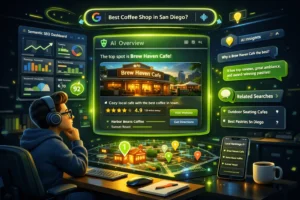
Local Businesses Rank In Google How Local Businesses Can Rank in Google AI Overviews in 2026 Book a Free Strategy Call See Case Studies FAQ
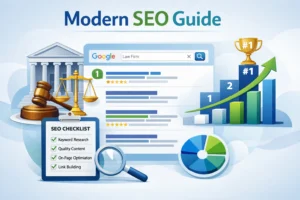
Local Law Firm SEO Law Firm SEO Guide: How Lawyers Rank #1 on Google Representative results from a client engagement. Identity protected by NDA. Book